Is a 6.6kW Solar System Enough for a Ballarat Home?
23 Sep 2026
Ballarat rooftops catch strong sunlight across most of the year, yet many homeowners still guess at the right system size. Some pick whatever capacity a salesperson recommends without checking their actual usage patterns. Others copy whatever their neighbour has installed, assuming one household’s needs completely match those of another.
Choosing the right capacity matters far more than following a popular trend or discount offer. A 6.6kW solar system has become the most common residential choice across Victoria for good reason. This guide explains whether that size genuinely suits your Ballarat home, your daily habits, and your future plans.
How Much Electricity Can a 6.6kW Solar System Generate in Ballarat?
A 6.6kW solar system typically includes around sixteen to eighteen panels, depending on panel wattage. Most solar calculators estimate this setup generates roughly 24 to 27 kilowatt-hours on an average Ballarat day. Output naturally drops during the winter months and climbs again as summer daylight hours lengthen.
Homeowners installing solar panels in Ballarat can generally expect strong output for most of the year given the region’s sunlight levels. TheSilhouette solar power panels are one option worth considering for a system this size.
According to the Australian Government’ssizing guide, a typical 6.6kW system uses around nineteen panels rated at roughly 350 watts each. That standard configuration is a big reason this size has become the default starting point for most Australian rooftops.
Is a 6.6kW System Big Enough for Your Home?
Several practical factors determine whether this output actually covers your household’s daily needs.
Your Average Electricity Consumption
Your electricity bills reveal exactly how many kilowatt-hours your household consumes each billing cycle. Compare that figure against the estimated output before assuming any system size fits perfectly.
When You Use Electricity
Daytime usage matters because solar panels generate power only when the sun shines. Households running appliances mostly at night rely more heavily on stored battery power or grid electricity.
Number of People in Your Household
Larger households naturally consume more electricity through cooking, heating, laundry, and everyday appliance use. A growing family may outgrow a smaller system faster than a single-person household would.
Future Electricity Requirements
Plan for upcoming changes such as electric vehicles, home additions, or a shift to electric heating. These future demands can quickly push consumption beyond what a smaller system comfortably supports.
How Do Different Solar System Sizes Compare?
Comparing solar system sizes side by side helps clarify where a 6.6kW setup actually fits. The table below outlines typical household situations worth discussing with your local installer.
Solar System Size
May Suit
Key Consideration
3–5kW
Small households or units
Limited headroom for future growth
6.6kW
Average family homes
Balances cost, output, and inverter limits
8–10kW
Larger households or EV owners
Higher upfront cost, greater long-term savings
10kW+
High-usage or all-electric homes
May require a three-phase power supply
Can You Combine Solar Panels With Solar Hot Water?
Pairing solar panels with a solar hot water system installation often maximises overall household savings. Hot water heating already accounts for a significant share of most Australian households’ energy budgets. Running your hot water system during daylight hours lets your panels offset that demand directly.
How to Choose the Right Solar System Size for Your Ballarat Home
Start by reviewing 12 months of electricity bills to accurately understand seasonal consumption patterns. Consider your household’s growth plans, including any appliances or vehicles you might add later. A qualified assessment from a local solar installation provider in Ballarat also accounts for roof orientation and shading.
Energy specialists consistently stress the importance of starting with real consumption data before selecting any equipment.
Why Choose Solahart for Solar Installation in Ballarat?
Solahart Ballarat installs systems using only in-house electricians who live locally and work exclusively for the company.
This approach ensures accountability, rather than relying on rotating subcontractor teams to handle your installation. With decades of Australian manufacturing experience behind every system, Solahart designs equipment built for harsh local conditions.
Bringing Your Ballarat Solar Plan Into Focus
A 6.6kW solar system suits many Ballarat households, though your consumption ultimately determines what fits best. Reviewing your bills, household size, and future plans gives you a clearer, more confident starting point.
Solahart Ballarat’s local team can assess your roof, habits, and goals during a free consultation. Getting the sizing right now helps you avoid costly upgrades later. Reach out to Solahart Ballarat today to find your right-fit system.
Frequently Asked Questions
Is a 6.6kW solar system enough for a family of four?
Most families of four in Ballarat find a 6.6kW solar system comfortably covers daytime electricity needs, though evening usage or an EV may require a larger system or added battery storage.
How much electricity does a 6.6kW solar system produce per day?
Output generally ranges from 24 to 27 kilowatt-hours per day, though shading, orientation, and seasonal sunlight levels can vary that figure considerably throughout the year.
How much will a 6.6kW solar system save me each year?
Savings depend heavily on your electricity rate, consumption patterns, and how much power you use during daylight, though many Ballarat households report meaningful reductions.
Is a 6.6kW or 10kW solar system better for a home?
A 10kW system suits larger households, all-electric homes, or properties that plan for electric vehicles and higher future consumption.
Can I upgrade my 6.6kW solar system later?
Many systems allow additional panels later, though inverter capacity and roof space ultimately determine how much expansion is realistically possible.
440W nominal power at Standard Test Conditions (STC – 1000 W/m2, 25±2°C, AM 1.5 G).
The bifacial solar panel is designed to generate energy from both the front and rear sides, depending on the amount of light that reaches the rear side. The rear side light depends on factors such as the type of roof, its albedo (reflectivity), and the method of installation. The actual performance of the bifacial solar panel may vary depending on the environmental and operational conditions. Please consult a qualified installer for the best installation method and location for your bifacial solar panel.
30-year Solahart Product Warranty covers certain defects with the Solahart Silhouette® panels. Please refer to the ‘Solahart PV Systems Owner’s Guide’ for full details, available on Solahart’s website www.solahart.com.au.
30-year Performance Guarantee is provided by the manufacturer of Solahart Silhouette® panels and guarantees the maximum reduction in power output performance of the panels over a 30 year period. Neither the Solahart Product Warranty nor the Performance Guarantee are intended to exclude, restrict or modify your rights under Australian Consumer Law.
Is a 6.6kW Solar System Enough for a Ballarat Home?
Why more Australians are installing solar power
Smart Australians are installing solar power to counter high electricity costs and reduce their carbon emissions. Solar panels achieve this by using the sun’s energy to create direct current (DC), which is fed through an inverter which converts DC into alternating current (AC), so the electricity can be used in your home.
Average Energy Consumption and Solar Power Needs
The average Australian household consumes around 16 kilowatt-hours (kWh) daily. If this is you, a 5 kilowatt (kW) solar power system could cover your electricity usage during the day. However, this may not be enough for your future needs.
Future-Proof Your Solar Investment
Provided you have enough roof space, installing more panels now or sizing the inverter to accommodate more panels in the future is a smart way to future-proof your solar investment. This approach ensures you will have sufficient electricity production to meet your evolving needs and the increasing trend towards electrification in Australia.
Understanding Electrification in Australia
Electrification is the shift towards using renewable electricity, rather than fossil fuels, to power various aspects of daily life, including transportation, heating, and cooking. In Australia, this transition is gaining momentum due to several factors:
Government Initiatives: The Australian Government has launched the National Electric Vehicle (EV) Strategy to make EVs more affordable and accessible, and to expand charging infrastructure. This initiative aims to encourage the adoption of EVs and significantly reduce emissions.1
Economic Benefits: Australian households can reduce their energy bills by using efficient electric appliances and vehicles supported by a clean energy grid.2
Environmental Impact: Shifting to electric-powered solutions helps reduce carbon emissions, contributing to Australia’s decarbonisation goals.3 This is particularly important as the country phases out fossil fuels and increases renewable energy production.
Planning for Future Energy Needs.
As electrification continues to rise, particularly with the adoption of EVs, it is crucial to ensure your solar power system can handle increased electricity demands. Here are some considerations:
Growing Your Family: More family members means higher energy consumption.
Purchasing an EV: EVs require substantial electricity for charging.
Adding Smart Appliances: Smart electric hot water systems and other energy-efficient appliances can increase your energy needs.
Home Renovations: Additions like a swimming pool requires an energy-consuming pool pump and potentially a heating solution, which can significantly boost your electricity usage.
By planning ahead and installing more solar panels or a larger inverter now, you can ensure your system is capable of meeting these future demands. This proactive approach not only maximises your current savings but also prepares you for the ongoing shift towards electrification.
Get in touch with us and we will find the best solution for you based on your current and future energy needs.
Choose High-Efficiency Solar Panels
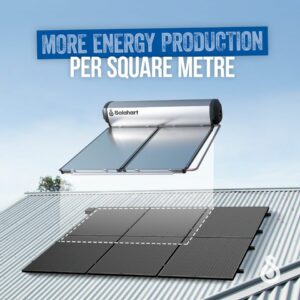
Choosing solar panels with higher efficiency can help generate more electricity per square metre, making full use of your roof space. Every Solahart Solar Power system uses world-leading inverters and high-efficiency panels with trusted Australian warranties, consistent with Solahart’s strict quality and performance requirements to withstand harsh Australian conditions.
Introducing the Solahart Silhouette® Bifacial Solar Panel
The newest addition to our range is the Solahart Silhouette® Bifacial Solar Panel, rated at 440W and 22% efficiency at standard test conditions.4 This dual-glass panel can produce energy from both the front and back sides of the module, potentially increasing the total power output from the same roof space.5 As they are covered with tempered glass on both sides, they are also more resistant to environmental and physical stress, such as dust and moisture.
Additionally, future-proof your investment further with a product warranty of 30 years6 as well as a performance guarantee of 30 years.7
Consider Battery Storage
Another factor to consider is the time of day you use most of your power. If you use higher amounts of energy at night or when electricity costs are high during peak hours, adding battery storage to your solar system is also a smart investment.
A battery allows you to store unused solar power during the day to use at night, on cloudy or rainy days, during blackouts, and when utility rates are more expensive. If you anticipate your night time energy usage will continue to grow in the future, installing a battery can protect you from rising electricity costs by using more of the power you generate from your solar system.
Solahart Home Energy Management System (HEMS)
Then, bring it all together with a Solahart Home Energy Management System (HEMS), a platform designed to control connected appliances in the home to reduce your energy costs in three key ways:
Maximise the amount of energy you use from your solar power system.
Use the cheapest grid energy possible where required.
Manage solar export limit, which involves diverting electricity generated by your solar system to connected home appliances, including your water heater and EV charging.
Learn more about HEMS below:
Invest in a Solar Power System Today
Investing in a solar power system can lead to immediate savings, especially if you take advantage of interest-free finance to pay for your system over time. However, thinking about the future can ensure the system you install now will produce the power you need as demand grows. Get in touch with Solahart today to organise a free in-home assessment where we can provide you with a bespoke solution for your home and budget.
440W nominal power at Standard Test Conditions (STC – 1000 W/m2, 25±2°C, AM 1.5 G).
The bifacial solar panel is designed to generate energy from both the front and rear sides, depending on the amount of light that reaches the rear side. The rear side light depends on factors such as the type of roof, its albedo (reflectivity), and the method of installation. The actual performance of the bifacial solar panel may vary depending on the environmental and operational conditions. Please consult a qualified installer for the best installation method and location for your bifacial solar panel.
30-year Solahart Product Warranty covers certain defects with the Solahart Silhouette® panels. Please refer to the ‘Solahart PV Systems Owner’s Guide’ for full details, available on Solahart’s website www.solahart.com.au.
30-year Performance Guarantee is provided by the manufacturer of Solahart Silhouette® panels and guarantees the maximum reduction in power output performance of the panels over a 30 year period. Neither the Solahart Product Warranty nor the Performance Guarantee are intended to exclude, restrict or modify your rights under Australian Consumer Law.